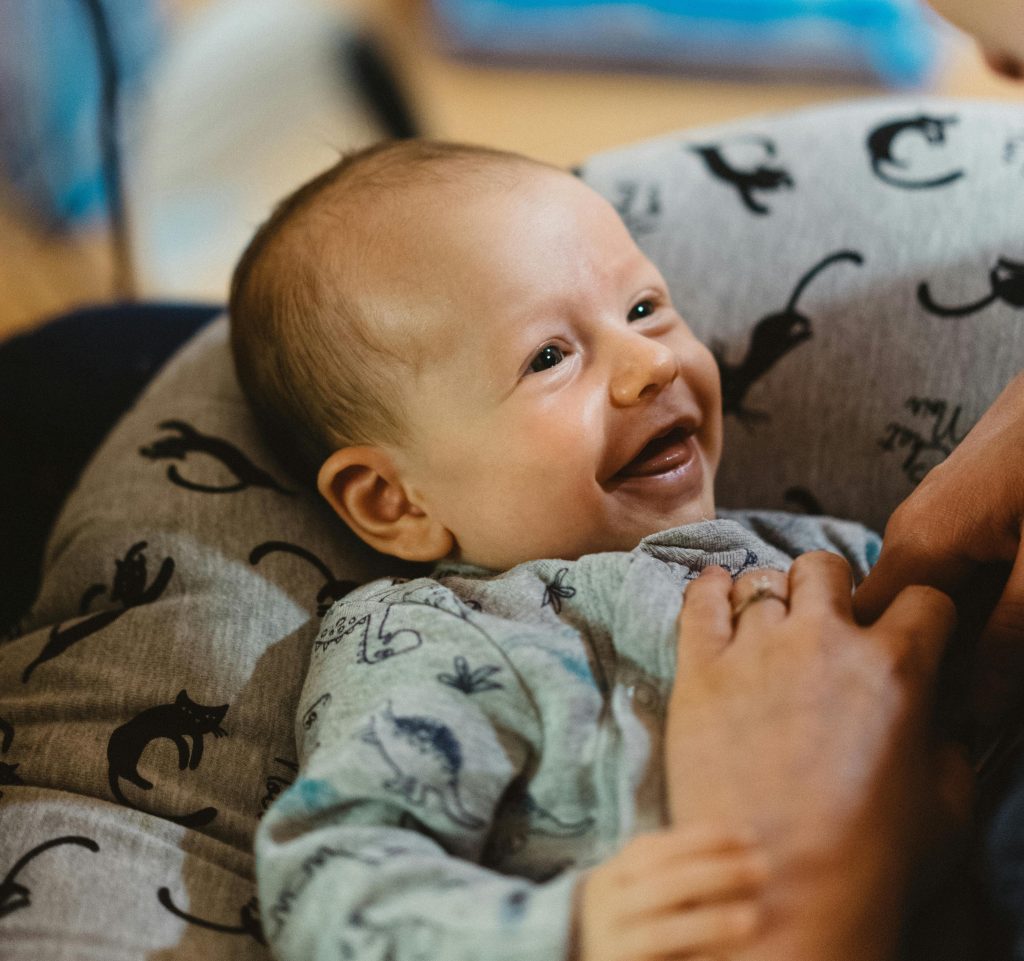
Gemma Guerrieria, owner of Little Gems in Stockport, is a dedicated and passionate childminder. Before she became a childminder, she supported children with SEND in schools, specialising in speech and language and motor support. Due to shifting family circumstances, Gemma wanted to work from home while continuing to work with children. So, she completed a childminding course with Stockport local authority nearly three years ago, and she’s been a childminder ever since.
Gemma works with an assistant and has six children under three years old Monday-Wednesday, and up to three children under three years old on Fridays. In this blog post, Gemma describes how she takes a responsive, relational, and supported approach to settling babies and families into childminding provision.
Responsive approach with babies
Settling in is an exciting time for babies, families, and childminders. It can be joyful to watch a baby’s world begin to expand with new people and experiences. However, it can also be a difficult moment of transition, with feelings of uncertainty and anxiety. Some babies can become quite anxious during the transition, finding it hard to settle in. This may look like a baby crying all day, needing to be held constantly, or being despondent and not engaging with anyone or any activities. Every baby responds to settling in differently, and Gemma described the importance of taking a responsive approach to ensure the smoothest possible transition.
For example, Gemma noticed that one of the babies in her care was having a difficult time settling in. Morning settle sessions were challenging for the baby, even when building up time slowly and ensuring there were only 1-2 other settled children present. Gemma tried a variety of tactics from timing how long she put the baby down for, to distractions, to extending garden time. However, the baby still struggled and would cry throughout the day, especially when put down.
One day, Gemma realised that the baby was calm and settled during a curious part of the day: teatime. When Gemma would cook tea every evening, the baby would stand at the play kitchen and happily mimic Gemma. This sparked a new approach. Gemma re-started settle sessions, but the baby would come during teatime when she was most comfortable. Slowly, they brought forward her drop off time, and introduced cooking activities in the day. Now, the baby is happily settled, thriving in her daily routine and making everyone laugh. Every baby is different, so settling in is about having the time, care, and intentionality to notice what works, what doesn’t, and shift practice accordingly.
Relational approach with families
Gemma also emphasized approaching settling in as a shared process between the baby, family and childminder. From even before the first settle session, she described the importance of getting to know the family’s routine at home through ‘All about me’ files. Gemma recommends getting an idea of what life is like at home, what the baby enjoys, and what helps them co-regulate, such as favourite lovies and songs. This will pave the way for a smooth settling in process, ensuring the baby is as comfortable as possible.
Gemma also conducts home visits and has frequent conversations with families. She’s found that this can reveal a lot about how a baby is settling in and sometimes offer things that families can do to support the process. For example, through home visits and conversations with a new family, Gemma realised that a young baby was not getting a lot of socialisation with other children at home, potentially impacting her transition to a childminder. Gemma suggested introducing soft play, baby groups, and parks into the baby’s life outside of childminding so she could get used to being around people. This suggestion helped both the family and baby massively, helping to ease the transition into Gemma’s care.
Supportive approach for childminders
Finally, Gemma recommends that childminders seek support for themselves throughout the settling in process. Unlike in nursery, childminders are often lone working, or may have 1-2 assistants. Because of this, it’s important to seek connection with others to ensure someone can support you to guide families and babies through the emotional transition period. Gemma sought support from an auntie who is a childminder, engaging in conversations about how to care for her wellbeing and offer the best possible support to settling babies. Gemma also had conversations with the EY team in her local authority who offer guidance and CPD during the settling in process.
Gemma’s story shows that settling in is a relationship that grows over time. When babies feel understood, families feel seen, and childminders feel supported, transitions become spaces for deep, authentic connection.
What has helped you support babies and families with settling in? We’d love to hear your reflections and experiences in the comments.
 www.childmindingbabies.blog
Leave a comment