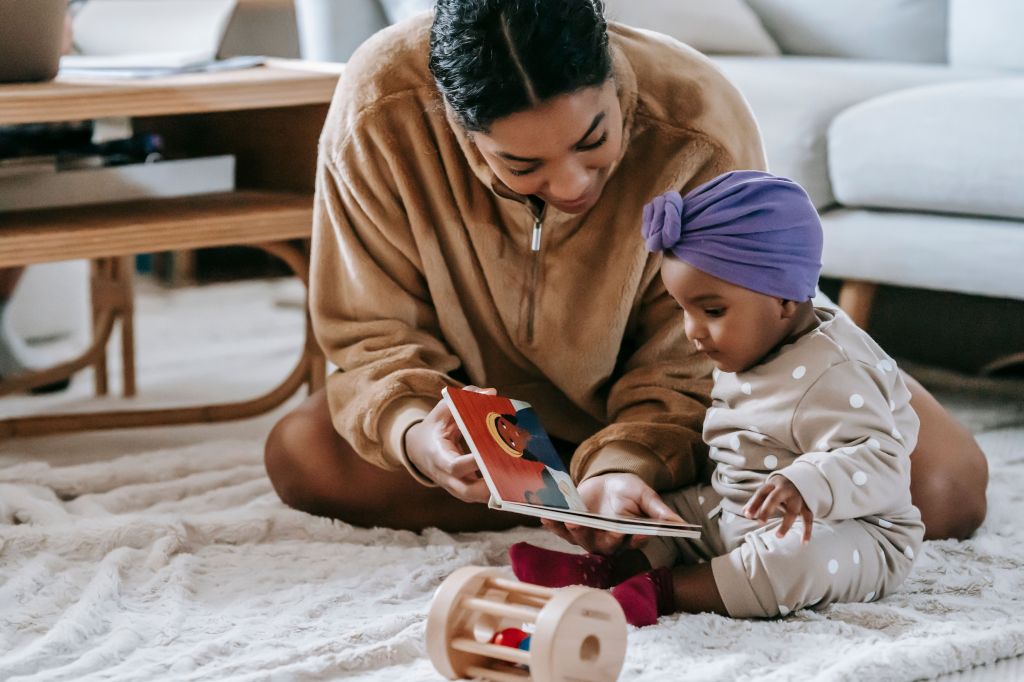
Childminders enter babies’ lives during a period of rapid growth and development, with the opportunity to come alongside them and support their wellbeing in the present while laying the foundations for the future. What we do during these earliest years matters.
Dr Carmen Dalli is a Professor of Early Childhood Studies at Victoria University of Wellington in New Zealand. Throughout her distinguished career, she has taught on early childhood studies courses and led influential early years policy work. In this blog post, we are delighted to share her insights into what good pedagogy with babies looks like.
What is pedagogy?
Carmen shared how the word pedagogy comes from the root words ‘child’ and ‘walk alongside’. Pedagogy is therefore about accompanying children in their learning and development. With babies, this takes the form of a pedagogy of care, where learning is embedded in everyday routines and interactions (Halls and Sakr, 2025). Carmen describes three key principles that should underpin pedagogy with babies.
- Babies are competent. Babies come into the world seeking to communicate through eye contact, movement, and cries (Trevarthen, 1979). Carmen explained that if we believe babies are competent, then we are going to be present with them, attending to what their cues and gestures mean and seeking to better understand what they want and need from us.
- Babies have rights. Carmen discussed the Convention of the Rights of Children, reminding us of our obligation to protect babies’ rights. She emphasised the importance of reflecting on how those rights are respected in everyday practice. Acts of care such as feeding and nappy changes should be done with babies, not to them, and childminders should be attentive and consistent with their care.
- If we respect babies, we must respect families. Carmen was clear that being a childminder is not a solo job. Everything that happens at our setting is hugely important for the wellbeing of the family, as well as the baby. Carmen described how it is a significant emotional event for the family to leave their child with a childminder. Childminders should find out what is important to the family by asking about the babies’ routine at home, how they soothe them when they are upset, and how they usually go to sleep.
Pedagogical mantras
These principles provide a foundation for practice. However, translating principles into the everyday can sometimes be challenging. Carmen suggests that pedagogical mantras can serve as useful reminders that keep our actions aligned with our values. Pedagogical mantras are ‘a kind of refrain that is a shortcut explanation for a professional action, or a reminder of how [to] go about a particular teaching goal’ (Dalli, 2018:15). In other words, pedagogical mantras are the sayings that we have in our head as we go about our day-to-day practice, acting as touchstones for pedagogy.
During our conversation, Carmen shared a few of her favourite mantras for working with babies that flow from the principles above:
- ‘Children learn from relationships with people, places, and things.’ This is a phrase in the New Zealand curriculum, Te Whāriki. This mantra helps childminders think about how they organise spaces, materials for babies to explore, and how the space is set up for non-mobile and mobile babies. It expands our thinking to consider places and things alongside our interactions with babies.
- ‘Yes’ environment. Similar to the above, this mantra draws our attention to the environment. We want babies to feel welcomed and like they are free to explore and play. This mantra helps us think about if the environment says ‘yes’ to babies’ curiosity and exploration.
- ‘You, me, see.’ Or in other words, ‘If you don’t know what to say, say something about you, say something about me, and say something about what we can see.’ Carmen learned this mantra from a speech therapist in Australia. This mantra is about supporting babies’ communication in a way that pushes past the initial awkwardness we can sometimes feel as we communicate with babies.
- ‘Who am I doing this for?’ Carmen learned this mantra from the Magda Gerber approach. This mantra can help us refocus on what matters most when we get swept up in the busyness of the day or when we are making big decisions: the babies.
These mantras remind us that pedagogy with babies is not found in elaborate activities, but in relationships, everyday interactions, and thoughtful responses to the children and families in our care. By returning to a small number of guiding principles and phrases, we can remain focused on what matters most. Here are some questions to help you reflect on your own practice:
- What principles guide your pedagogy with babies?
- What ‘mantra’ do you come back to in your day-to-day practice?
References
Dalli, C. (2018). Refreshing Our Work with Infants and Toddlers: Mantras from Theory and Research into Practice. Early Childhood Folio, 22(1), 15-20.
Halls, K., & Sakr, M. (2025). Constructions of babyhood among baby room leaders in the UK. Journal of Early Childhood Research: ECR, 23(1), 18–30. https://doi.org/10.1177/1476718X241279348
Trevarthen, C. (1979). Communication and cooperation in early infancy: A description of primary intersubjectivity. In M. Bullowa (Ed.), Before Speech: The Beginning of Interpersonal Communication (pp. 321-347). Cambridge University Press.


Leave a Reply